
Question
Gramps,
How do we know if a prophet is a true prophet, and how is a new one selected?
Various submissions
Answer
Hello everyone,
With the death of President Russell M. Nelson, several questions have again arisen regarding the succession of prophets and also how to tell if a prophet is a true prophet. Though I’ve answered these questions in the past, with the current events of the last few days, let’s do it again.
Both ancient and modern scripture insist that no man can declare himself a prophet and be accepted as such. The apostle Paul, writing in Hebrews, outlined the essential principle that “no man taketh this honour unto himself, but he that is called of God, as was Aaron” (Hebrews 5:4). Here, the calling is direct, divine, and operates through specific priesthood channels.
Old Testament: Aaron was called by God through Moses (Exodus 7:1-2), establishing the template that prophets and high priests act under God’s undisputed commission.
Early Christianity: After Judas’s betrayal, the Apostles replaced him through united prayer, supplication, and what scriptures describe as an “inspired popular vote”—seeking God’s will in the matter (Acts 1:13-26).
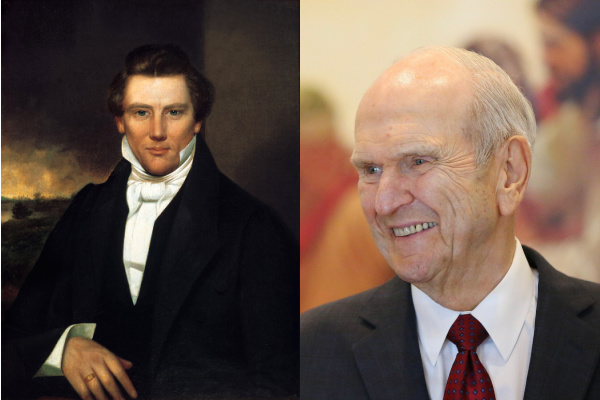
Restoration: The organization of The Church of Jesus Christ of Latter-day Saints in 1830 saw a deliberate restoration of prophetic authority through direct revelation. Joseph Smith was not self-appointed; he claimed and exercised authority received through visions, angelic ministrations, and sustained by the believers.
In the Church today, the establishment and succession process for prophets is systematic and divinely guided. When the Prophet passes away, the First Presidency is dissolved, and the Quorum of the Twelve Apostles—of which the senior member by ordination date becomes the acting President—unanimously sustains the next Prophet after united council and prayer. This pattern ensures both historical continuity and spiritual legitimacy.
At the next General Conference, the newly selected Prophet is sustained by the vote of Church members—reinforcing the principle of community confirmation as found in scripture and early Church history.
A genuine prophet must be called by God, not self-interest, popular acclaim, or human institution alone. In the tradition of Aaron, Moses, the apostles, and Joseph Smith, a prophet receives a commission either by direct revelation, heavenly manifestation, or as part of the established governing body acting under inspiration.
In the Church, ordination and setting apart to the prophetic office is performed by the laying on of hands by the apostles—those already holding the requisite priesthood keys. This preserves an unbroken spiritual lineage and avoids the confusion of competing claimants.
A true prophet’s teachings will not contradict prior revelations or the standard works of scripture. New teachings may come, but they harmonize with and build upon previous divine law. Joseph Smith declared, “God’s house is a house of order,” and this order is preserved through cumulative, not contradictory, revelation.
This doctrinal safeguard was emphasized by ancient Christian texts such as the Didaché and reiterated in modern instruction. If a prophetic claimant attempts to teach doctrine at odds with established scripture, their claim is suspect.
Perhaps most profoundly, anyone seeking to discern a true prophet is encouraged to inquire of God directly. As taught by James, “If any of you lack wisdom, let him ask of God” (James 1:5). Members are admonished to pray and receive confirmation from the Holy Spirit that the person claiming prophetic authority is, in fact, so ordained. This spiritual witness is not reserved for leadership but is promised to all sincere seekers.
Unique to the Church is the principle of “common consent”—the community of believers has a role in sustaining those called to prophetic offices. While divine revelation initiates the call, the people’s sustaining vote is a vital part of the process.
When apostasy or confusion has arisen in the Church, the order and clarity of this process have been crucial in maintaining unity and legitimacy—illustrated powerfully in the transition from Joseph Smith to Brigham Young.
Christ Himself taught, “By their fruits ye shall know them” (Matthew 7:20). A true prophet’s life and ministry bear spiritual fruit: personal integrity, doctrinal soundness, care for the poor, humility, and lasting impact. Prophets are not perfect and have made mistakes, but their lives reflect repentance, growth, and a persistent return to God’s will.
Importantly, prophets cannot teach “prophecy” as if it were a learned skill. According to the early Christian text Didaché, prophecy is a direct gift from God and is not transmitted via education or tradition, distinguishing true callings from mimicked authority.
It is vital to recognize that, while divinely called, prophets are human and subject to error. Scriptural accounts of Moses, Jonah, and others display imperfection and growth. The Church teaches that while human weakness exists, the Lord speaks through prophets, will not allow the Church to be led astray, and enables members to seek spiritual confirmation for themselves.
Prior questions and answers:
What are modern-day prophets?
How do you identify a real prophet from a fake one?
How is a new president of the Mormon Church called to be the president?
Are modern-day prophets set apart, and if so, how?
Who announces who the new Prophet will be?
How do I determine if a prophet is false?
Does a man have to be an apostle to be the next prophet?
How is a new apostle chosen?
Gramps